Nothing lasts forever

Nothing in this life is eternal. Nothing shall last forever. For good or bad, everything shall pass away.

Find comfort and peace in that, for if you are afflicted or if something is bad and ails you, it will not last forever, so endure with patience. There will be a day when you are free from that negative affliction.

And if there be something good you desire, but it eludes you and leaves you feeling forsaken or distraught you cannot claim it, be at peace for it too shall one day fade away.

Only one thing is eternal; and that is God. Seek Him and His joy, for everything else shall fade away. All the things of this world, whether for good or bad, are temporal and will one day cease, so while we may seek after good things, do not be broken in spirit when they do not find their way to you, for they are a temporary thing.

Why is pride bad in the Bible?

A question I woke up to this morning from a dear friend and brother in the Lord.

This question was a big one, and before I replied I spent some time meditating on it, while there is much we could say about pride, here was a starting point to answer that question.

Good question, big question too.

First, pride in the heart is a poison, pride was the sin of satan, he wanted to be above God, he thought he was stronger than God so he rebelled.

Pride was a part of the temptation of Adam and Eve, for Satan said that if they are the fruit they would be like God

The road of pride always leads us away from God, as it is the direct opposite of the nature of God, God who is above all things, greater than all creation, is humble by His nature, the only one who could have any right to be prideful in a sense, denies pride to walk in humility

When we become prideful, we put ourselves above others, we stop looking at how to improve ourselves, and we tear others down and beat them down

Pride also slowly corrupts, and becomes a door for the enemy to use to bring us off the path we should go

*Read through proverbs when you have time*

Isaiah 2:12
For the day of the LORD of hosts shall be upon every one that is proud and lofty, and upon every one that is lifted up; and he shall be brought low:

Isaiah 13:11
And I will punish the world for their evil, and the wicked for their iniquity; and I will cause the arrogancy of the proud to cease, and will lay low the haughtiness of the terrible.

James 4:6
But he giveth more grace. Wherefore he saith, God resisteth the proud, but giveth grace unto the humble.

2 Timothy 3:2
For men shall be lovers of their own selves, covetous, boasters, proud, blasphemers, disobedient to parents, unthankful, unholy,

1 Peter 5:5
Likewise, ye younger, submit yourselves unto the elder. Yea, all of you be subject one to another, and be clothed with humility: for God resisteth the proud, and giveth grace to the humble.

Romans 1:28-32
And even as they did not like to retain God in their knowledge, God gave them over to a reprobate mind, to do those things which are not convenient;
Being filled with all unrighteousness, fornication, wickedness, covetousness, maliciousness; full of envy, murder, debate, deceit, malignity; whisperers,
Backbiters, haters of God, despiteful, proud, boasters, inventors of evil things, disobedient to parents,
Without understanding, covenantbreakers, without natural affection, implacable, unmerciful:
Who knowing the judgment of God, that they which commit such things are worthy of death, not only do the same, but have pleasure in them that do them.

Proverbs 8:13
The fear of the LORD is to hate evil: pride, and arrogancy, and the evil way, and the froward mouth, do I hate.

Proverbs 11:2
When pride cometh, then cometh shame: but with the lowly is wisdom.

1 John 2:16
For all that is in the world, the lust of the flesh, and the lust of the eyes, and the pride of life, is not of the Father, but is of the world.

Mark 7:21-22
For from within, out of the heart of men, proceed evil thoughts, adulteries, fornications, murders,
Thefts, covetousness, wickedness, deceit, lasciviousness, an evil eye, blasphemy, pride, foolishness:

So, why is pride bad? It is because pride stems from a wicked heart, it is a sin of the world, and does not come from the heart of the Father, but comes from sin.

Why is it a sin? Because it drives us away from who God wants us to be, the. Bike talks about how the proud in heart will be broken down

Pride causes us to use and hurt other people for our own sake, when we are full of pride, we stop being used by God, or allowing ourselves to be humble enough to do what He may ask of us

Reverence

Now we come to the final word for this series, last post we talked about fear, and another word came up a lot during that time, reverence, so what is reverence exactly?

Referring back to the same dictionary we have been using, the word reverence is defined as such

1: a feeling of profound awe and respect and often of love; veneration.

2: an act of showing respect especially in obeisance.

To revere, is vastly different from fear

Fear, is a often negative emotion, but reverence is a respect and move for someone so powerful that it causes an impact on behavior.

To revere the Holy God of all creation is not to be afraid of a powerful malicious malignant being, but to recognize and respect the severe discrepancy and enormity of a simple truth

The God who created all that is, who is Holy, where we are sinful, who is all powerful, where we are weak, deserves to be respected and worshipped as such.

The Bible tells us, without God we can do no good thing, reverence for God is born not out of a place of fear, but if genuine understanding of who God is, and His Holy nature and how that correlates to us as His create beings.

Reverence comes from acknowledging just how much greater our God is than we are, and seeing that truth. It is not fear, it is awe, respect, and should drive us into obedience, obeisance, love, and veneration.

To see God for who He is, should lead us to worship, and to worship properly, in spirit and in truth, a place of perfect love where there is no fear, for perfect love (God is love) casts out fear.

Fear

The English word Fear or a form of fear is used in the KJV Bible over 500 times, with 18 different words in the Hebrew language being translated as fear. Clearly this is an important topic, so what does the Bible mean when it talks about fear?

First, what does the English language define fear as?

Let’s go back to the New American heritage dictionary that we have been using, fear is ascribed the following definitions:

1: a feeling of alarm or disquiet caused by the expectation of danger, pain, disaster, or the like. Terror; dread; apprehension.

2: an instance or manifestation of such a feeling.

3: a state or condition of alarm or dread.

4: extreme reverence or awe.

5: A ground for dread or apprehension.

Or also: to be in awe of; revere.

What about the 18 Hebrew words?

In every instance where God is speaking with His people and mentions fear in regards to their view of Him, the proper word would be reverence or awe, not a sense of terror or dread.

Fear, in regards to God, is not about being scared, terrified, afraid or worried, stressed or in dread of Him or His actions, but that rather we should stand in awe of Him.

Is there a place for fear? Absolutely; those who do not have a relationship with God may feel fear, but fear is not for the believer. Fear was not for the children of Israel, even those who struggled with doubt and sin, fear was for those who stood at war with God’s people, and even then it was a fear, a dread of the Israelites.

Fear of eternal damnation can lead us to seek a way out, fear of punishment, but even this fear is not fear or dread of God, but a fear of the consequences of one’s own actions and lifestyle choices.

Fear, can lead us to seek a way to avoid what we are afraid of, we should never fear God, but fear a life lived outside of or away from God, if we are to have fear let it rather be of a fear of the consequences of sin, a fear or being an enemy of God and what that will look like, but again fear has no place for the believer.

Perfect love casts out fear

There is no fear in love; but perfect love casteth out fear: because fear hath torment. He that feareth is not made perfect in love.

1 John 4:18

Mercy

What is mercy? Mercy can be described as compassionate treatment especially of those under one’s power, kind and compassionate treatment of an offender, enemy, prisoner or any other under your authority, clemency, a disposition to be kind and forgiving, something for which to be thankful or a fortunate occurrence, or a blessing.

Is there a biblical difference in mercy? Let’s see.

Unger’s Bible dictionary defines mercy as

“Mercy is a form of love determined by the state or condition of its objects. Their state is one of suffering and need, while they may be unworthy or ill-deserving . Mercy is at once the disposition of love respecting such, and the kindly ministry of love for their relief.” (A quote from Miley, syst. Theoly., I, 209, 210). The expression, “I will have mercy not sacrifice,” indicates that God is pleased with the exercise of mercy rather than the offering of sacrifices “, though sin has made the latter necessary. Mercy is a Christian grace, and is very strongly urged toward all men.

We will then look at mercy from God to man, and mercy from man to man

God, has every right to judge man for our misdeeds, we are all under the authority of God, as He is the sovereign, the sole creator, and the only pure, righteous and perfect judge.

All have sinned and fallen short of the glory of God, therefore we are all worthy of judgement, but it is the nature of God to be merciful, and so He in His goodness and mercy, extends mercy to each and every one of us, it is only by His mercy that any of us are able to escape from the fiery judgement which we are all worthy.

We have all broken God’s law, and therefore we are all under the authority to be judged by the lone lawgiver, but He offers us mercy, and His desire is that we would all accept His mercy.

2 Peter 3:9
The Lord is not slack concerning his promise, as some men count slackness; but is longsuffering to us-ward, not willing that any should perish, but that all should come to repentance.

God’s mercy is without limit, is offered freely and openly to all, and is the only thing that can save us from our path to destruction. God is not required to offer mercy, in fact that’s the beauty of mercy, mercy is not earned, but is given solely by the one who has the authority and power to judge the one under their authority.

What about mercy of men? How can we showcase mercy? are we obligated to show mercy? Is mercy love, or love in action? Can one love and not show mercy? Some of these questions will be answered in another post as we compare love and mercy, but for now we will tackle obligatory mercy and how we can showcase mercy.

This life gets hard, and it gets messy, and hurt people tend to hurt people. We are all in some measure broken and hurting, and that pain, that hurt and that brokenness can lead us to hurt others, whether we mean to or not.

People, even with the best of intentions can still hurt other people, and when we are hurt it can be easy for us to want to exact vengeance, to see the other person pay for their hurt they have caused, and sometimes it can be within our means to requite them if their wrongdoing.

These moments, when we are fully justified for wanting someone to pay for their wrong, both in the eyes of man and God, we can choose to have someone pay. Nobody would judge us for exercising our right to seek just recompense, it is reasonable, right and just.

In those moments however, we can offer mercy. Where judgement should be, we can choose to offer mercy, it is not required, often it is misunderstood and can be mocked and hated of the world, but mercy, when extended, can be life changing, behavior impacting, and Christ like.

Do we have to choose the path of mercy? No, there are times when the wrongs done to us truly are worthy of judgement and we have the right to seek out justice and judgement, now many instances we may desire justice for slights that are not worthy of justice, where it is out of our flesh and our selfish desire that we seek for others to hurt for what we presume to be slights, but there are also slights and wrongs worthy of harsh judgement.

Those moments, when someone truly wrongs us to the point of having genuine aught against them, and have a right to seek recompense, we have a choice of seeking out that retribution that their behavior merits, or we can choose to show mercy. In those instances where there is a path, and a choice, we get to choose right judgement without fault, or we can choose mercy, only God can be the judge over us in those moments. We will see, there are times where Christians can execute harsh judgement and we see God not imparting judgement on them for it.

Now, lest I leave any confused, and it sounds like an opportunity to hold onto grudges, there are a great, and I dare say most, offenses, slights and transgressions we suffer at the hands of others, both within the body of Christ, and without, do not deserve judgement; they are slight misgivings that hurt our pride more than cause real harm, these do not fall under items that justify judgement.

Only the feelers injuries permit harsh judgement, but slights that wound our feelings or pride do not give us such justification, or else everyone will run around holding grudges over the smallest of thing, of which should have no place amongst the body of believers, but in all things we should esteem others better than ourselves (Philippians 2:3
Let nothing be done through strife or vainglory; but in lowliness of mind let each esteem other better than themselves.)

Rather, mercy should always be the path chosen, and we should keep infighting and forgiveness amongst the household of faith, for the eyes of the world are always on us, watching how we behave ourselves, and by our love they will know we are Christ’s disciples.

Be blessed brothers and sisters, to all the dear saints who read this, may the grace and mercy of Christ be with you and in you. May you be strengthened to endure this life of trouble we wrestle with until the day of our glorious ascension when we take our place in the heavens where this is no variance or dissimulation.

Let God’s grace fill you to your brim that your cup may overflow, stand strong in the unity of the faith with all those who are called by Christ’s name. Amen.

Love

Over the next few posts we are going to be looking at several major themes, but even before that we are going to do a study on the word for each theme. The reason for this is so we have a clear understanding of the word we are trying to look at. Unfortunately in our modern world, many words are starting to lose their definition, a clear sense of meaning and precise nature of a word.

So, before we look into our subjects, such as love vs mercy; love vs fear; and love to reverence, we need to clearly define and understand those words. Love, like so many other words, has been losing its definition,

The 1975 The American Heritage Dictionary of the English Language New college edition, ISBN 0-395-20360-0, has a great definition of the word love.

1: an intense affectionate concern for another person.

In our modern society we use love to represent acceptance of everything, pure affirmation and confirmation, to many of the modern Americans love no lingers means concern for another, it means you have to accept and approve of them, and more importantly you have to approve of whatever they believe or think, or else you do not love them.

This is not true, love is deeper than just acceptance and affirmation, love is a deep yearning and care for the well being of another person, and if we truly love someone and they are in self destructive behavior or desires, our job is not to approve of that behavior but to love them through it, to be there for them, to walk with them, to show compassion and care; but never to accept or promote that which is wrong.

The Bible gives us another definition of love as well:

“Love suffereth long, and is kind; love envieth not; love vaunteth not itself, is not puffed up, doth not behave itself unseemly, seeketh not its own, is not provoked, taketh not account of evil; rejoiceth not in unrighteousness, but rejoiceth with the truth; beareth all things, believeth all things, hopeth all things, endureth all things. Love never faileth…”
‭‭1 Corinthians‬ ‭13‬:‭4‬-‭8‬ ‭ASV‬‬

“This is my commandment, that ye love one another, even as I have loved you. Greater love hath no man than this, that a man lay down his life for his friends.”
‭‭John‬ ‭15‬:‭12‬-‭13‬ ‭ASV‬‬

Even amidst the powerful message of biblical love, one thing remains evident, true love is about caring more about the well being of the one you love than you care about your own well being.

If you see someone walking a path that leads to destruction, love does not encourage that behavior, but challenges it, shows mercy, compassion, care and grace to that individual through that journey, to bring them out of it, not that they might abide in it and follow the path whose ways lead to hell, death and the grave.

If I see someone running towards a cliff, and they have a blindfold on, is it love to let them continue running in that direction? Even if they love the direction they are heading? God forbid, lest I tell them not that there journey leads to destruction and warn them not, their blood becoming required at my hand who knew but did nothing to warn them, moreover if I let them go that way it shows a lack of love, as not warning them shows I do not care for their well-being.

Love then, is not blindly affirming what someone desires in the moment, but is more concerned about their well being, not the short term emotional happiness, which changes day by day.

As a parent I love my children, and there are times my child desires strongly things that is not good for them, things that can hurt them, and when I deny them it they cry and become upset, because they think I am being mean or harsh; but it is because I care I protect them from things that can hurt them, even to the point of them being upset with me, this is a clear picture of what love truly is.

Love cares more for the well-being of another, to the point of being willing to die for them at its highest level. Love is intense, burning, affectionate, cares deeply, sees the best in what could be, but love does not allow one to injure themselves in self gratification and pleasure, because it cares too much too allow that.

On IVF and other topics

I was recently watching a TurningPoint USA debate featuring the late Charlie Kirk, and he was talking with twins born of IFV about his stance on it, during the video I had this reflection.

I have often in my personal life looked at 1 Samuel 15:23 which states that rebellion is as the sin of witchcraft. The short explanation behind this is as follows

Witchcraft is not about rituals and magic, witchcraft seeks the power of God, apart, seperate and without God. Witchcraft is the desire to have God’s power for yourself, which brings us to rebellion as we become at enmity with God.

You see, humanity often desires to have the power of God, but we want things our way, we want our will and our desire, even when we see the examples of witchcraft throughout the scripture it is those who want godly supernatural power without having to rely on the one true God.

It’s not unlike those who worship other gods, we want things our way and the way we want them, regardless of God’s plan for our lives. But what does this have to do with IVF? In the video, the point is made that IVF seeks to usurp the natural order of sex leads to children, by having children without sex, the 180 of abortion, but both are in opposition to the natural order.

Now, before i continue I will say, I understand that infertility, sterilization, and struggling to conceive are extremely mentally hard on those who suffer from them, and I do not want to seem calloused and uncaring, that is not the case.

Infertility, even in today’s society can be extremely difficult for people to cope with, and this post is not to shame, hurt or attack anyone who struggles to conceive, it is simply to look more into the topic of IFV, and truly this same line of thinking can expand to other topics as well.

When we take matters into our own hands, and remove God, we become dangerously close to walking in rebellion, and when we remove God but seek to gain the results we desire without God, but need godlike power to receive that which we desire, we tread the line of witchcraft and rebellion, and which by there definition are acting in rebellion to God but still desiring that power for ourselves.

Has IVF lead to beautiful things by giving families that couldn’t conceive children? Yes, is that beautiful and life? Yes. Are we walking a thin line of what is right and what is witchcraft? I believe so.

I believe in a God who is still working miracles today like He has throughout human history, I believe that those who struggle to conceive can find hope in a God who heals, restores, blesses, opens closed wombs, and works mighty miracles, even more important, when we are in those deep struggles, and we open our hearts to Him, He can draw us nearer to Him in that time, but when we take it upon ourselves to seek that power and not need God, we walk a dangerous line of denying Him.

Why do we see less miracles in the west than over seas? I believe the answer lies in the following, we have a weakened sense of faith when it comes to miracles, we don’t believe in them as strong as those over seas, and we have denied the need for miracles by taking power into our own hands.

Why do we need a God to heal the lame, give sight to the blind, open wombs, hearing to the deaf, cleanse lepers and so on, when we have the power to do it ourselves without God?

Is suffering the Will of God for our lives? No, I do not believe that God desires our suffering in this life, but desires to give us good, and I know many struggle to find healing despite many hours of prayer, and that this topic is highly sensitive and controversial, but I also believe healing comes in at God’s timing and will and not our own.

I will close with two biblical miracles and what I believe a part of those are, and that they show why sometimes a miracle can be delayed from our perspective. Keep in mind, everything we see in this life we see with much of our attention being focused on ourselves, not on God’s larger plan most of which we will never see or understand this side of heaven, hence why faith and trust in God are far above our own plans and understanding.

And he took the mantle of Elijah that fell from him, and smote the waters, and said, Where is the LORD God of Elijah? and when he also had smitten the waters, they parted hither and thither: and Elisha went over. And when the sons of the prophets which were to view at Jericho saw him, they said, The spirit of Elijah doth rest on Elisha. And they came to meet him, and bowed themselves to the ground before him. 2 kings 2:14-15.

Now when God performed this miracle for Elisha, it served two functions, it marked to the observer that as God was with Elijah so would he be with Elisha, and it also served to enforce the faith of Elisha and to show him that God was with him as well.

Now Peter and John went up together into the temple at the hour of prayer, being the ninth hour. And a certain man lame from his mother’s womb was carried, whom they laid daily at the gate of the temple which is called Beautiful, to ask alms of them that entered into the temple; Who seeing Peter and John about to go into the temple asked an alms. And Peter, fastening his eyes upon him with John, said, Look on us. And he gave heed unto them, expecting to receive something of them. Then Peter said, Silver and gold have I none; but such as I have give I thee: In the name of Jesus Christ of Nazareth rise up and walk. And he took him by the right hand, and lifted him up: and immediately his feet and ankle bones received strength. And he leaping up stood, and walked, and entered with them into the temple, walking, and leaping, and praising God. And all the people saw him walking and praising God: And they knew that it was he which sat for alms at the Beautiful gate of the temple: and they were filled with wonder and amazement at that which had happened unto him. And as the lame man which was healed held Peter and John, all the people ran together unto them in the porch that is called Solomon’s, greatly wondering. Acts 3: 1-11

Now it is extremely unlikely that Jesus never walked by the crippled man, I can almost guarantee He did, so why did He never heal the man? Well, much like the miracle of Elisha, when Peter and John called for healing the miracle marked several things, it increased the faith of Peter and John I am sure, it also confirmed the words spoken of by Jesus, and marked the passing of the miracle working power of the Holy Spirit to the believers.

It honored and glorified God, and while it would have honored or glorified God either way, had Jesus healed the man, or Peter, though truly it isn’t Peter that healed the man but God using Peter, God’s timing allowed it to confirm the words of Jesus, and the passing of the ministry to the apostles.

How often do we expect miracles in our timing? Had Jesus healed the man he would have been walking and working weeks ahead of what happened, but then the miracle of Peter and John would never have been. The miracle wasn’t just for the lame man, it was for those who saw, and it was for Peter and John as well, so it is today, miracles that happen for the benefit of one are rarely for the benefit of one, but of many, and if you’re not receiving your miracle, don’t lose faith but trust in God’s timing and will.

Think of the testimonies we can be taking away when we decide to take matters into our own hands and instead of giving God room to work a miracle, we seek after the power to make our own, and therefore remove the testimony of God in that circumstance. Think of the testimony we take away when we choose to make our own way instead of choosing to love God and walk in faith regardless of circumstance.

When we choose the way of godlike power without God, we make our God look weak to the world, but when we suffer for His sake, we gather for ourselves treasures we cannot fathom. When we make a way for God to work miracles, He still can even in this day; but it comes down to His will and His time, and never our own.

Worship and praise

Often in our culture we use these two words interchangeably, but worship and praise have to separate meanings and what it comes down to is the focus.

I’ll start with a simple explanation of both and move in to expound on them. Simply put, worship is on God for who He is, praise is about what God has done.

Worship is about reverence, awe struck wonder at God for who He is, the heart of worship longs to recognize the nature of God, to see God for who He is, and to respond in humility, love and recognition that God is holy and above all, loves His creation.

In worship our eyes are entirely fixated on God, we do not look at ourselves but purely and entirely on God, on His being, on His nature, on His very person.

In praise, we look at the things that God has done, that can be what he has done in creating, what he has done in our lives, what he has done in the lives of those around us, or ones we look to as inspirations.

When we worship, our gaze becomes entirely fixed and focused on God, in praise we look not at God, but the actions of God. That isn’t to say we don’t honor God when we praise, it’s to point out the different nature of the two, and the purpose and function of the two.

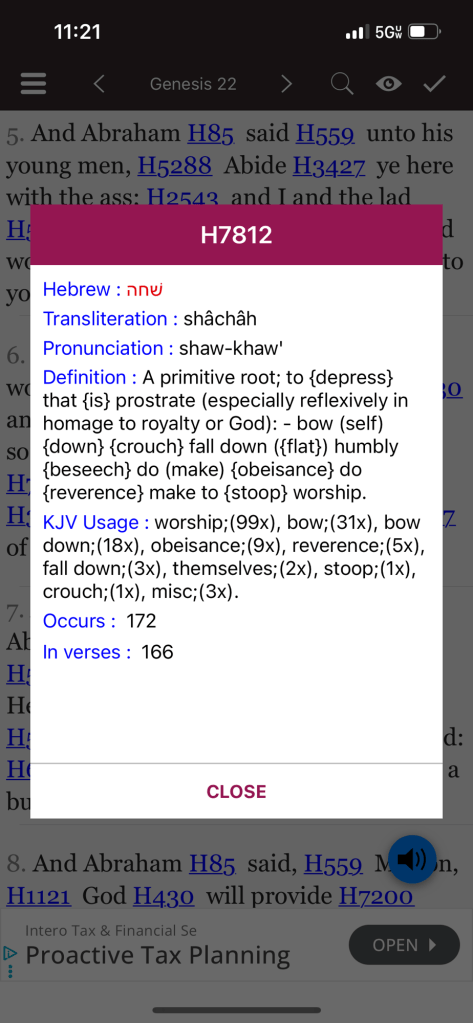
The Hebrew word for worship is shâchâh, it means to bow down, or lay down, to revere and humbly worship.

When we worship God, we humble ourselves, our mind and spirit and simply sing or meditate on God, His goodness, His enduring mercy and love, the fullness of which we do not understand. The only thing we focus on is God, our entire heart and mind should be consumed with the fire of His eternal being.

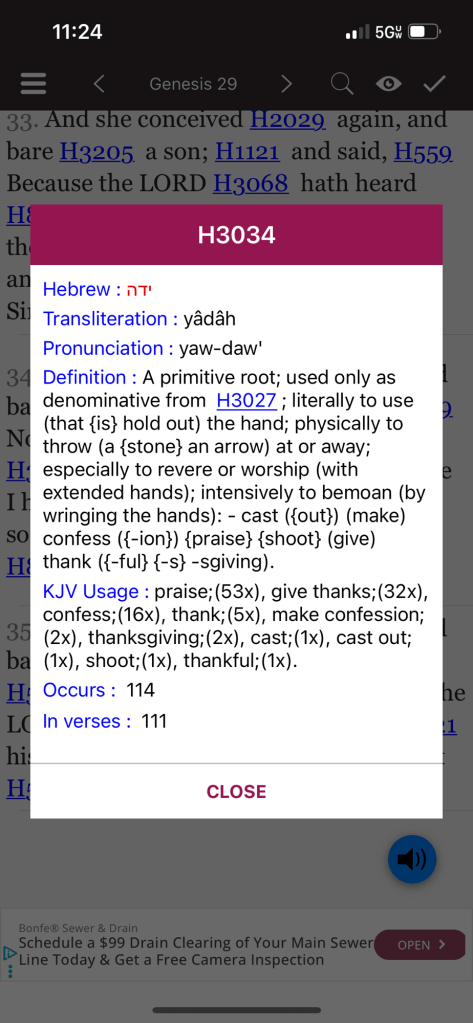
Praise, or yâdâh is about confession, outstretched hands, singing and thanksgiving. When we come to God in yâdâh we offer up our voices in recognition of the things he has done, for the mercy bestowed upon us, but in shâchâh sing of the mercy of God in recognition of it being who He is for He is mercy and merciful all His days.

Whether we choose to receive His mercy or not does not change that mercy is His nature, so we can choose to not receive His mercy, therefore we could not sing in yâdâh, but our yâdâh or lack of it, does not change that He is worthy of shâchâh or worship.

If we try to worship the works of God, then His actions become an idol in our lives, we begin to only seek God for what He can do for us, but our worship is to be eyes off ourselves, and fully on Him.

In praise we can sing of what God has done with thanksgiving, in fact sharing what God has done in our lives is a major part of our life, but it should not be confused with worship.

Worship does not say I… me, but is wholly and fully fixed on God. The heart in worship falls before the Father and declares Him holy, righteous and above all. The heart of worship is to see God for who He is and to allow that fearful reverence to humble us and recognize that apart from Him we are nothing.

In praise, our yâdâh, we shout out the wonderful works of His hand, we stretch out our hands and sing the glorious deeds of almighty God, in praise we sing God I thank you, God you have saved me, praise is testimonial, worship is a humble declaration.

Occupy

I was recently asked to look into what Jesus meant when He said “occupy til I come.” In Luke 19:13

The story, from Luke 19:13-27 is a parable, an image of the kingdom, told to help us to better understand.

Now at first glance one might read this, and with the wording used understand it as trade, business, having an occupation, for the word used in Greek we translate as occupy means to trade.

But again, we must read this as a parable, not as anything whose true intentions are financial. (Now that being said, I am not saying to not build Christian based businesses, I am a proponent of capitalism, entrepreneurship, and believers owning businesses and using them as a means to reach the lost.)

But rather, I believe there is another deeper meaning as well to this. God has given each of us a gift, the gift of salvation. Do we take our salvation, hide ourselves away from the world, avoiding any temptation or fear that we might lose our salvation and so we avoid conflict, and hide the gospel and ourselves away?

Or, are we being fruitful, multiplying and populating the coming kingdom? Are we taking our gift, the gift of salvation, and testifying what God has done, the salvation He has wrought in us, and bringing others into the kingdom with us?

The wording in this passage indicates that we should be in labor, putting the work, gift and investment given to us and there should be a fruit as a result. God does not call us home the day we are saved, because God expects us to take our salvation and the gifts He has given us and use them to glorify Him and do the work He has for us.

How we do that will look different for each individual, how God blesses each of us, and how we use those blessings will look different for each of us, but we are to take those gifts and blessings and turn them to good for the kingdom. When Jesus returns He does not expect to return and find we have taken our time and the gifts bestowed upon them and been unfaithful poor stewards.

For some of this, this may mean starting our own business, or rearing a large family, or pastoring etc, it matters not how it looks, only that we have taken the gifts and been fruitful in our doing. Will every believer be a nurse or doctor? Will all start large businesses that employ hundreds of people? Will all preach from a pulpit or travel the nations preaching? No, God has called each of us to our own work, empowering us with many manifold gifts, some spiritual, others mental, physical, some in finance, others in business, but what matters is we take the gifts and use them for the kingdom sake.

What then? Is our salvation contingent upon the work we do? No, else the cross becomes in vain, but we are called as good stewards, faithful sons to be diligent in our pilgrimage, good caretakers and image bearers of the God most High, who is not lazy not slack, but working hard. Our work we are called into, in whatever form, is designed to glorify the Son, build the kingdom and honor our Heavenly Father.

To occupy in this context is not having dominion, but being diligent workers, not in laboring for our own small kingdoms that will pass away, but toiling for the kingdom, which is of Christ and in us, adding into it, not that any man adds, for some plant, others water, but God provides the increase.

Has the church always understood and acted on this? This message while intended on the individual can also be applied to the Church local and global. Is the church taking the gifts of each member of the body and raising them up, equipping them to the work of the ministry? Are we encouraging others gifts and helping them to use them for the kingdom?

Are we so focused on what the mouth does for the body we are forgetting what the hand does? What the foot can do? The finger or the ear? All of us are apart of one body, designed to honor the Son. The church does good setting money aside for missionaries, for new pastors and for updates to the building, but is the Church always putting it’s entire resources to the good work of building the kingdom?

We will look more another day into the question, has the church always been a good and faithful steward? What has the stewardship looked like, occupying until our Lord’s return? Throughout the history of the church.

The gospel

The good news, and somehow the most controversial thing the world has ever known, since it’s founding people have been trying to fight and stifle it.

Since Cain and Abel unrighteous men have killed those men who seek after righteousness and Truth. Nothing is new about this, it has just been a long time since it has been seen like this in America.

The good news of Jesus Christ must be proclaimed in the face of any and every darkness, for it is the unbreakable and unyielding truth, it is the only thing that saves.

Jesus came, born of a virgin, was raised as a Jewish man, he lived a perfect and sinless life, the only one who could. He was the fullness of the Godhead in human flesh. For over three years he worked a ministry, with signs and wonders following.

During the time of his ministry Jesus cleansed the leper, healed the sick, made the lame to walk and the deaf to hear, preached to the poor, the dead were raised to life, he challenged hypocrites, he challenged people who didn’t want their views challenged, he ate with sinners and loved on them, he commanded the evil spirits out of those they tormented and calmed the storms.

Jesus spoke with authority, with an unmatched understanding of the Holy scriptures. He challenged the views of the world of His time and never backed down, they couldn’t outsmart him, they couldn’t trap Him in their rhetoric, and when they tried to trap Him politically they failed.

While at dinner with a leper, a woman came and anointed him with ointment from an alabaster box, a sign of his coming burial.

Jesus was betrayed by one of his 12, lead before the priest, they mocked Him, beat Him, sent Him before Pilate.

Pilate couldn’t find fault in Him, He was sent before Herod before whom He would not speak. Pilate tried to release Him, but the people chose a murderer over the one who came to save them.

Jesus was beaten again, a crown of thorns was placed upon His head, he was beaten beyond being recognized as a man, then He was crucified where He was mocked and reviled again.

There in His final hours He met a thief, for on either side was a thief. One would find salvation in the lamb of God, the other chose to scorn the one who loved.

Jesus gave up the ghost on the cross, the purpose of His life was finished, He accomplished all He came to do. A mighty earthquake and darkness fell, the veil was split in two.

Jesus was buried in a tomb where never a body lay, purchased by a Pharisee, and a great stone was rolled over the tomb entrance.

The 11 left scattered and knew not what to do at the loss of Jesus.

On the third day, the first day of the week the women went to the tomb and met an Angel. The stone was rolled away.

“He’s not here” proclaimed the angel, for Christ our Lord had risen, just as He said He would do. Jesus was seen by many over the next forty days, as were a great many others who had been dead and raised from the grave with the resurrection of Jesus.

Jesus ascended into heaven to sit at the right hand of the Father until the appointed day of His return, where He sits now, as His church proclaims the good news of what Christ has done for all mankind.

Jesus death was not because He challenged the religion, it was not because He was a good teacher. Jesus died as it was the only sacrifice that could wash away the sins of the world. He died so that the lost sheep of the world could come home.

Jesus is the lamb that was slain before the foundation of the world, whose blood is the only way to cleanse us of our sin, the only way we can come to salvation and in His name alone is the hope for our eternal salvation.

Jesus is the perfect and eternal sacrifice who died to take away the sins of the world and to call us out of sinful living, but the world hated Him, rejected Him and despised Him, for the world is darkness and could not comprehend Him, for He is the light.

His love for the people of the world, and creation could never be fully understood by us, for it was His great pleasure. Everything that is is by Him, He was in the beginning with the Father, and the Father is in Him and He in the Father.

The good news is we are able to come into the full love of the Son and the Father, through Jesus Christ, it is open to all who will call on His name, call on the name of Jesus Christ that you might be saved. For the Father is not willing that any should perish but that all come to repentance.